History: Seeking a Spirit Distinct from Yamazaki
In 1973, fifty years after the founding of Yamazaki, Suntory's second president Keizo Saji was determined to find a location that could produce a spirit entirely different in style. He scoured Japan and finally discovered this water source at the foot of the Southern Alps. The goal for Hakushu was clear: to create a lighter spirit with green, botanical aromas to enrich Suntory's blending library. Want to learn more about the history of Japanese whisky? Read our feature: Whisky Brands You Need to Know! A Guide to Scotch and Japanese Whisky.
The Soul of Terroir: The Waters of Ojira River
The soul of Hakushu lies in its water. The source is the Ojira River, designated as one of Japan's '100 Famous Waters' (Meisui) by the Ministry of the Environment. Rain and snowmelt are filtered through granite layers for decades, resulting in ultra-soft water with a hardness of approximately 30. This crisp, pure water gives Hakushu whisky an exceptionally smooth mouthfeel and clean finish, providing a sharp contrast to the harder 'Rikyu no Mizu' used for Yamazaki.
Craft Secrets: Wooden Washbacks and Diverse Stills
Hakushu's signature 'lactic acidity' and 'fruitiness' come from its unique dedication to traditional craft:
1. Wooden Washbacks
Unlike many modern distilleries that use stainless steel, Hakushu insists on wooden washbacks. Wood provides better insulation and houses the distillery's unique lactic acid bacteria. During the late stages of fermentation, these bacteria thrive, imparting rich esters, creamy notes, and a yogurt-like tang that form the foundation of Hakushu's complex flavor.
2. Stills of Diverse Shapes
Inside the Hakushu stillhouse, you'll find steam-heated stills of various shapes and sizes. This diverse equipment allows Hakushu to produce a spectrum of spirits, from light and floral to heavy and robust. This is why a single brand like Hakushu can exhibit such a versatile flavor profile. For Suntory's deep brewing philosophy, see: In-Depth Analysis of Suntory Whisky.
3. Maturation in the Forest
Hakushu's warehouses are scattered throughout the vast forest. The distinct four seasons and moist, fresh air allow the barrels to 'breathe' the forest's essence. Time rounds out the sharp alcohol, adding layers of light smoke and green tea aromas.
Featured Hakushu Expressions
Hakushu expressions are defined by age, each showcasing a different facet of the forest:
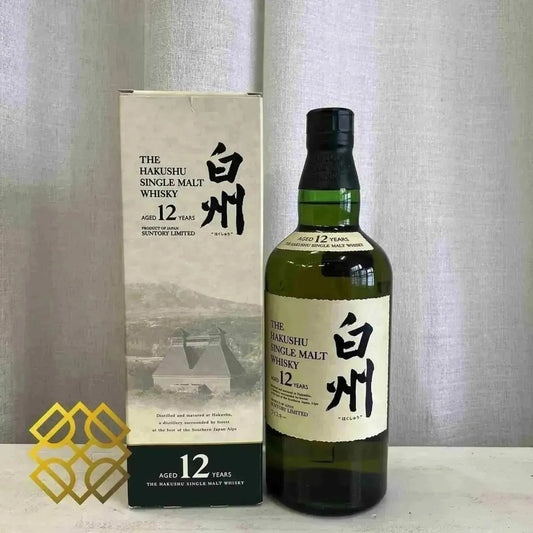
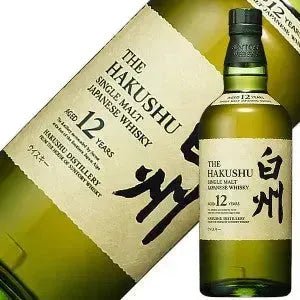
Hakushu 12 Year Old — Freshness of New Leaves
The perfect entry into the Hakushu style. It features aromas of fresh green leaves, green apple, and jasmine, with a palate of sweet pear and a hint of smoke.
→ Shop Hakushu 12 Year Old
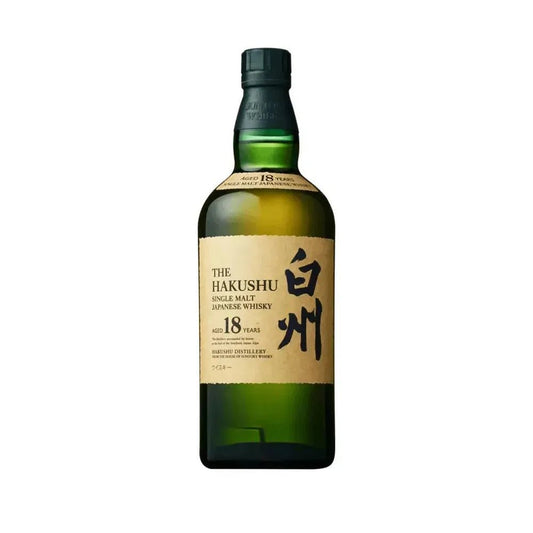
Hakushu 18 Year Old — Ripened Fruits
If the 12 Year Old is a spring forest, the 18 Year Old is an autumn orchard. Long maturation transforms the fresh herbal notes into rich aromas of ripe papaya, mango, and dried herbs. The body is fuller with a delightful woody finish and dark chocolate bittersweetness.
→ Shop Hakushu 18 Year Old
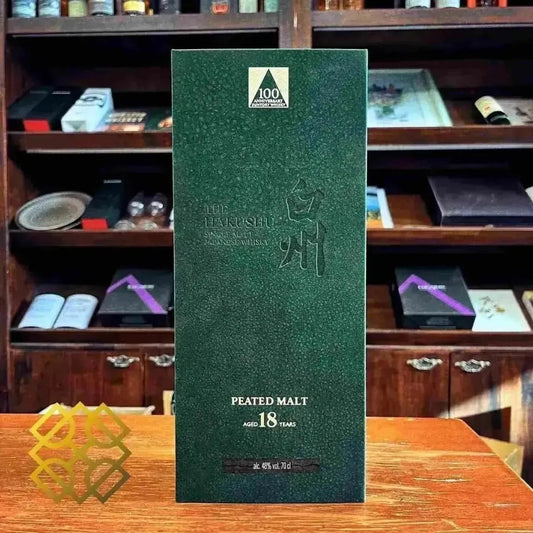
Hakushu 18 Year Old 100th Anniversary — A Tribute to Peat
To celebrate the 100th anniversary of Suntory Whisky, this special edition amplifies Hakushu's smoky character. The blender selected peated malts to showcase the brand's complexity and depth. A collector's masterpiece.
→ Shop Hakushu 18 Year Old (100th Anniversary)
Alcohol Please brings you rare Hakushu whiskies. From the fresh 12 Year Old to the profound 18 Year Old, every sip is a miniature of the Japanese forest. Explore more? Visit our Japanese Whisky Section or Suntory Brand Overview. More distillery info at Wikipedia: Hakushu distillery.


 Sold out