Scotch Whisky
Scotch Whisky in Hong Kong: All Five Regions, In Stock
Alcohol Please keeps 2,000+ Scotch whiskies in stock in Hong Kong: from the orchard-and-sherry elegance of Speyside and the peat smoke of Islay to the sea-salt spice of the Islands — single malts, blends, independent bottlings (IB) and single casks. Genuine stock, same-day pickup at our Kowloon Bay store.
▼ Expand: buying guide, shipping & pickup, quick tour of the six regions
How to choose: three quick steps
- By flavour: Speyside often leans fruity and sherried; Islay is known for peat smoke, though several distilleries make unpeated expressions; Islands and Campbeltown tend toward maritime salinity. These are general regional tendencies, not fixed rules — individual distilleries vary widely.
- By type: start with official bottlings (OB); collectors can explore independent bottlings (IB), single casks and closed-distillery rarities.
- By budget: from everyday drams to collector-grade bottles — sort by price with the filters.
Shipping & pickup
- Free delivery: free Hong Kong local delivery on orders over HK$1,000.
- Store pickup: same-day pickup at our Kowloon Bay shop — visits welcome.
The six regions at a glance
- Speyside — elegant fruit & sherry: Macallan, Glenfiddich, Balvenie
- Islay — peat smoke & iodine: Ardbeg, Laphroaig, Lagavulin
- Highland — hugely varied, coastal salt to heather honey: GlenDronach, Glenmorangie
- Campbeltown — oily, salty, old-school funk: Springbank
- Lowland — light and gentle: Auchentoshan, Rosebank
- Islands — sea salt and wild spice: Talisker, Highland Park
Want the deep dive on legal definitions, the five regions and independent bottling culture? Read our Complete Guide to Scotch Whisky.

Scotch Whisky Regions
-

Campbeltown: Scotland's Smallest Yet Most Distinctive Region Campbeltown Whisky originates from the...
-

Scottish Highlands: The Most Diverse Flavor Spectrum in Whisky Highland Whisky comes...
-

Islands Whisky: Flavorful Pearls Scattered Across the Scottish Coastline Islands Whisky is...
-

Islay: The Sacred Land of Peat and Sea Breeze Located off the...
-

Lowland Whisky: The Gentle and Elegant 'Lowland Ladies' Lowland Whisky is produced...
-

Speyside: The Golden Heart of Scotch Whisky Speyside Whisky is a region...


-
Thompson Bros. TB/BSW 9YO Final Release, 45%
Regular price HK$600Regular price -
Thompson Bros. Clynelish 8YO, 2026, Batch 001, 48%
Regular price HK$500Regular price -
Thompson Bros. Inchmurrin (Loch Lomond) 13YO, 2013/2026, 52.2% (WB87.33)
Regular price HK$900Regular price -
Tamdhu Cask Strength Batch 008, 55.8%
Regular price HK$880Regular price -
Signatory Vintage Whitlaw (Highland Park) 8YO 2018/2026, 1st fill PX Sherry Butts Finish, 46%
Regular price HK$580Regular price -
Signatory Vintage Caol Ila 10YO 2016/2026, 46%
Regular price HK$560Regular price -
Scotch Universe ELGINARIS (Glen Elgin) 15YO, 2011/2026, 52.7%
Regular price HK$850Regular price -
Bruichladdich PC5 Redux ROCK’NDAAL 05.1, 63.5% (WB87.45) (Cash/Credit Card Price)
Regular price HK$1,870Regular price -
Tobermory 18 Years Old, 46.3% (WB87.21)
Regular price HK$1,250Regular price -
GlenAllachie 19YO, 2026, Masters of Wood, 50% (WN90) (Cash/Credit Card Price)
Regular price HK$2,020Regular price -
Brave New Spirits Clynelish 10 Years Old, 2016/2026, Cask Masters, #305668/2016, 55.4%
Regular price HK$850Regular price -
Bruichladdich 12YO, 2012/2025, Micro-Provenance Series, #5186, 62.8% (Cash/Credit Card Price)
Regular price HK$1,640Regular price -
The Whisky Agency Inchgower 32 Years Old, 1980/2012, Sea Life, 52% (Cash/Credit Card Price)
Regular price HK$3,400Regular price -
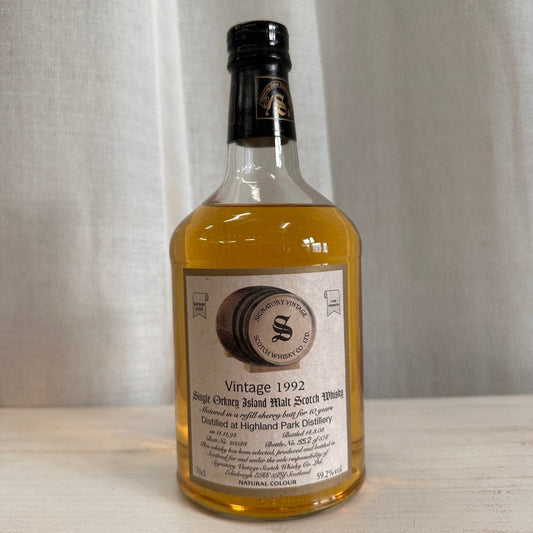
Signatory Vintage Highland Park 10YO, 1992/2003, Dumpy, #20588, 59.2% (Cash/Credit Card Price)
Regular price HK$2,360Regular price -

Bruichladdich (Octomore) Octomore 09.2 Dialogos 5 Years Old 58.2% (WB88.44) (Cash/Credit Card Price)
Regular price HK$1,920Regular price -
Highland Park 13 Years Old 2004/2018, #6204, for Rúna 25th Anniversary Edition, 62%
Regular price HK$1,250Regular price -
Highland Park 12YO 2005/2018, #4267, for Munich's 5 Star Airport, 61.9%
Regular price HK$1,250Regular price -
Gordon & MacPhail Longmorn 25YO, 1998/2023, #20600101, 53.7% (WN90) (Cash/Credit Card Price)
Regular price HK$3,190Regular price -
Sansibar Blended Whisky 21YO, for Koenhee Korea, 49.6%
Regular price HK$1,050Regular price -
Signatory Vintage Ronnie's Dram, Single Grain Whisky, 43%, 50ml
Regular price HK$200Regular price -
Signatory Vintage Clynelish 12 Years Old, 2013, 100 Proof, Batch #1, 57.1%
Regular price HK$620Regular price -
Thompson Bros Alness (Dalmore+Teaninich) 12YO, 2026, Blended Malt Whisky, 50%
Regular price HK$680Regular price -
The Art Collection Blair Athol 17YO 2008/2025, #3009881, Milano Whisky Festival, 53.3%
Regular price HK$1,180Regular price -
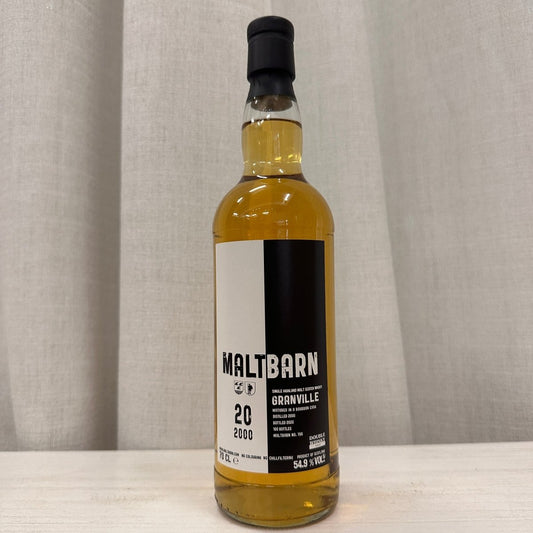
Maltbarn Granville (Clynelish) 20YO 2000/2020, No.156, 54.9% (Cash/Credit Card Price)
Regular price HK$1,950Regular price -
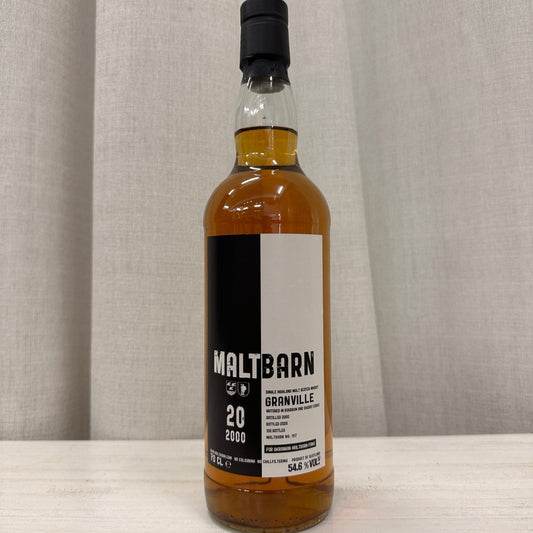
Maltbarn Granville (Clynelish) 20YO 2000/2020, No.157, 54.6% (Cash/Credit Card Price)
Regular price HK$1,950Regular price -
Laphroaig 15YO, 2026, 46%
Regular price HK$780Regular price -
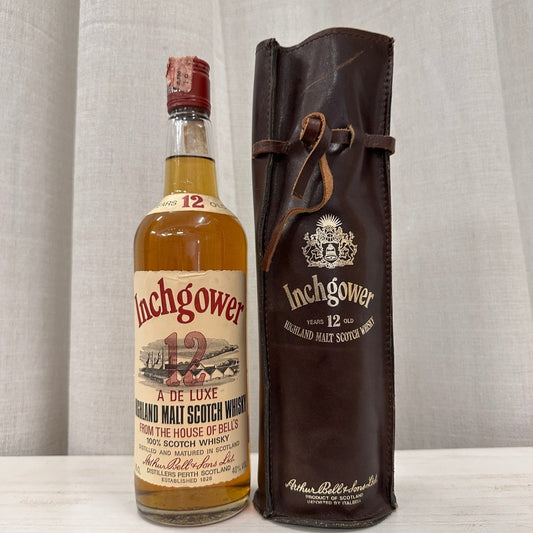
Inchgower 12YO 40%, 1980s Bottled, 750ml (Cash/Credit Card Price)
Regular price HK$1,950Regular price -
Anam Na H-Alba The Soul of Scotland Wardhead (Glenfiddich) 1997/2018, #1, 54.8% (WF87) (Cash/Credit Card Price)
Regular price HK$1,740Regular price -
The Whisky Agency A Secret Speyside Distillery 28 Years Old 1995/2023, Sherry Butt, 51.1%, Joint selected by East Village and TWA (Cash/Credit Card Price)
Regular price HK$1,920Regular price -
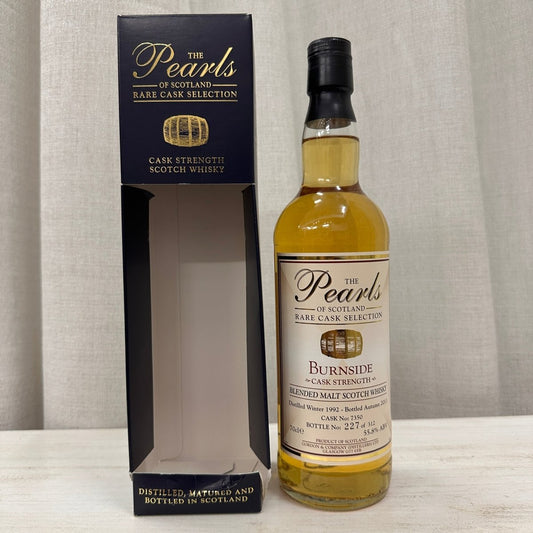
The Pearls of Scotland Burnside (Balvenie) 1992/2013, Rare Cask Selection, #7350, 55.8% (Cash/Credit Card Price)
Regular price HK$1,740Regular price -
Signatory Vintage BenRiach 25YO, 2000/2026, Symington's Choice, #25632, 60.2% (WB88.57) (Cash/Credit Card Price)
Regular price HK$2,540Regular price