Tropical Aging and the Greedy Angels
The soul of Indian Whisky lies in its 'extreme climate'. In cold Scotland, the annual Angel's Share (the rate of evaporation) is about 2%; but in high-temperature, high-humidity India, this figure reaches 10% to 12% or even higher. This means the 'breathing' between the liquid and the oak cask is extremely intense, rapidly extracting and concentrating flavors. While this leads to significant volume loss (a 10-year-old cask might be less than half full), it results in an incredibly concentrated body full of oiliness and complex spices. The industry often says: 'One year of aging in India is equivalent to more than three years in Scotland.'
Unique Ingredients: Six-Row Barley from the Himalayan Foothills
Another secret to the flavor lies in the barley. Unlike the Two-Row Barley mainstream in Europe, Indian Whisky primarily uses Six-Row Barley grown at the foot of the Himalayas. These smaller grains have higher protein and enzyme content; though less starch means lower alcohol yields, it converts into richer amino acids. This gives Indian Whisky its signature traits: thick oiliness, a creamy texture, and a unique spicy finish. To learn more about the basics of single malt, refer to: What is Single Malt Whisky?
The Golden Peak: Why is it hard to find 20-year-old Indian Whisky?
When shopping for Indian Whisky, let go of the obsession with 'high age'. Due to the staggering maturation speed, the 'golden peak' for Indian Whisky usually falls between 4 and 8 years. Beyond this, the liquid easily absorbs too many oak tannins, leading to a dry, overly bitter (over-oaked) mouthfeel. Therefore, Indian Whisky is typically released as Non-Age Statement (NAS) or with young age labels—not to save costs, but as a deliberate choice by distillers to capture the liquid at its 'perfect point of balance'.
Alcohol Please Top Recommended Brands
We have selected the four most representative Indian brands to let you experience the passion of tropical whisky:
1. Amrut — The Legendary Pioneer
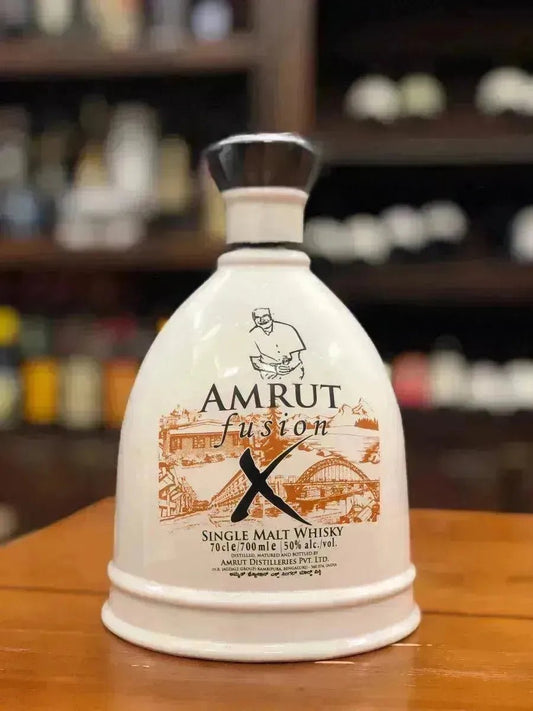
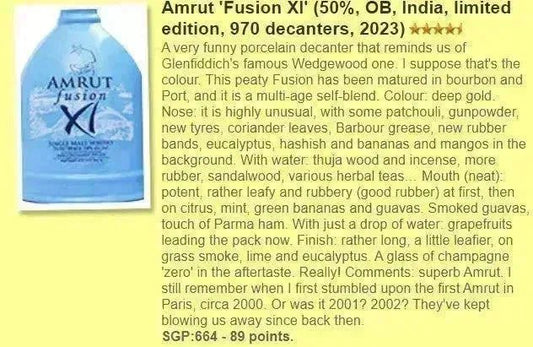
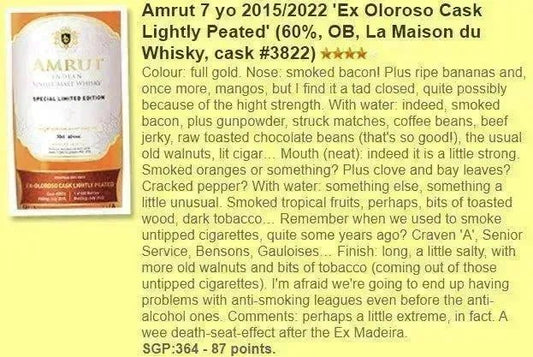
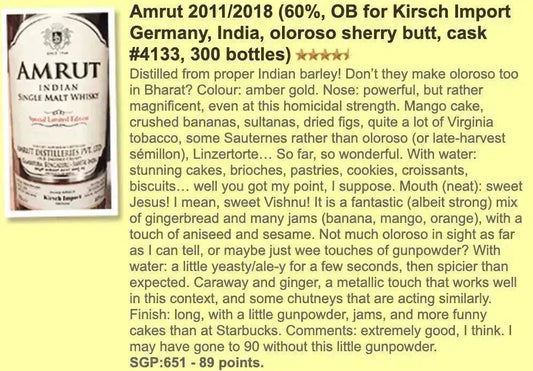
From the tech hub of Bangalore, Amrut was the first Indian single malt brand to shock the world. Its classic Fusion series masterfully combines 75% Indian barley with 25% Scottish peated barley, creating a perfect balance of East and West. The style is famous for rich toffee, ripe tropical fruits, and a powerful spice explosion, serving as the starting point for many to discover India.
3. Indri — Acclaimed Triple Cask Craftsmanship
Indri from Haryana is the brightest rising star. Its flagship Trini is the first to blend Bourbon, French Red Wine, and Sherry casks, showing incredible balance under heat with complex aromas of black tea, pineapple, and dark berries, frequently defeating legacy Scotch brands in blind tastings.
4. Rampur — The Nectar of Former Royalty
Rampur is located at the foot of the Himalayas, where extreme temperature fluctuations (scorching summers, freezing winters) give the whisky unique 'depth'. The Rampur style leans toward elegance, often featuring notes of lychee, apricot, rose, and wood, earning its reputation as the elegant aristocrat of Indian Whisky.
Alcohol Please invites you to break regional boundaries and taste world-class Indian Whisky. Whether it is the powerful Amrut or the elegant Rampur, they are all stunning choices. For more academic background, refer to Wikipedia: Indian whisky.

 Sold out
 Sold out