Irish Whiskey
Irish Whiskey: The Sleeping Giant Awakens
Irish Whiskey was once the most popular spirit in the world, conquering the globe even before Scotch Whisky. After a century of silence, Irish Whiskey is now undergoing a renaissance. Most expressions are renowned for the extreme smoothness and creamy mouthfeel brought by 'Triple Distillation' and the unique 'Single Pot Still' style. From historic giants to terroir-driven newcomers, Ireland is redefining the standards of premium whiskey.
▼ Click to read more: Deep Dive into Triple Distillation, Pot Still Craft, and 5 Essential Brands
Whisky or Whiskey?
Irish whiskey is spelled Whiskey, with an extra 'e' compared to Scotch. This represents the distinct historical paths of the two regions. Want to know the story behind this letter? Read: Whisky or Whiskey: What's the Difference?
Why Triple Distillation? Deconstructing the Secret of Smoothness
While Scotch whisky mostly uses double distillation, the most iconic tradition of Irish Whiskey is 'Triple Distillation'. Although this increases production costs and time, it yields an irreplaceable style:
1. The Art of Subtraction: Removing Impurities
Every distillation is a purification process. The third distillation further filters out heavier oils and congeners. This makes the newly distilled spirit (New Make Spirit) lighter, purer, and removes harsh alcoholic bites.
2. Elevating Alcohol Content and Esters
Triple-distilled spirit often reaches over 80% ABV (Scotch double distillation is around 70%). This high purity better highlights the barley's esters, resulting in floral, grassy, and citrus notes with a silk-like texture, perfect for beginners or those seeking a refreshing style.
The Irish Signature: Single Pot Still
If peat is the soul of Islay, Single Pot Still is the national treasure of Ireland. Unlike Scotch Single Malt which uses only malted barley, the traditional Irish process includes 'Unmalted Barley'. This gives the spirit a unique spiciness, creamy texture, and fresh green apple notes that cannot be replicated.
Why add unmalted barley? This originated from the 1785 'Act for granting Duties on Malted Barley'. While the history of malt taxes dates back to 1682, its 1785 implementation in Ireland catalyzed the Single Pot Still style. Clever Irish distillers added unmalted barley to their mash to reduce tax burdens. Distillers discovered that this formula brought a unique oiliness and spice that became the hallmark of the category.
Irish Whiskey Brand Guide
From new-wave innovators to century-old classics, here are the brands you must know:
1. Waterford — The Terroir Revolutionaries
Founded by Bruichladdich legend Mark Reynier, Waterford Distillery sparked a 'Barley Terroir' revolution. Their 'Single Farm Origin' series distills barley from individual farms separately, allowing drinkers to experience the influence of soil on flavor. It is one of the most avant-garde whiskey brands today.
→ Shop Waterford Single Farm Series
2. Redbreast — The Benchmark of Single Pot Still
Often called the 'Holy Grail of Irish Whiskey,' Redbreast adheres to 100% Single Pot Still craftsmanship and uses extensive Sherry cask maturation. Its body is thick and oily, filled with notes of Christmas cake, dried fruit, and spice.
3. Midleton — The Name for Luxury
Midleton is the largest distillery in Ireland and home to Redbreast and Jameson. The Midleton Very Rare series represents the pinnacle of Irish blending, released annually in limited quantities. Read more about their milestones: Midleton Distillery Celebrates 200 Years.
4. Teeling — The Spirit of Dublin's Revival
Teeling was the first new distillery in Dublin in 125 years, symbolizing the rebirth of the industry. They are known for innovation, using unique wine and rum casks for maturation to break traditional frameworks with bold, modern flavors.
5. Jameson — The Global Face of Ireland
The world's best-selling Irish whiskey. Jameson is the top choice for bars and cocktails due to its classic triple-distilled smoothness. The brand actively engages in modern collaborations, such as: Jameson Becomes Official Sponsor of LA Galaxy.
Alcohol Please brings you a curated selection of New Wave Irish spirits. From traditional distillery news to Waterford's terroir experiments, we guide you through the charm of the Emerald Isle. For more history, visit Wikipedia: Irish whiskey.

-
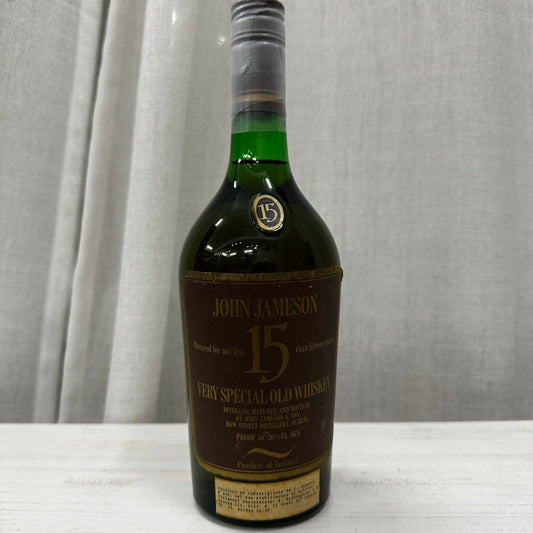
John Jameson - 15YO, 1970 Bottled, Very Special Old Whiskey, 750ml, 40% (Cash/Credit Card Price)
Regular price HK$3,980Regular price -
Master of Malt Saints & Sinnes & Rebels & Rouges (Irish Whiskey) - 21 Years Old, 2025, 40%
Regular price HK$1,030Regular price -
Teeling - 17YO, 2022, #16621, Distillery Exclusive, Cognac Cask, 55.5% (Cash/Credit Card Price)
Regular price HK$1,950Regular price -

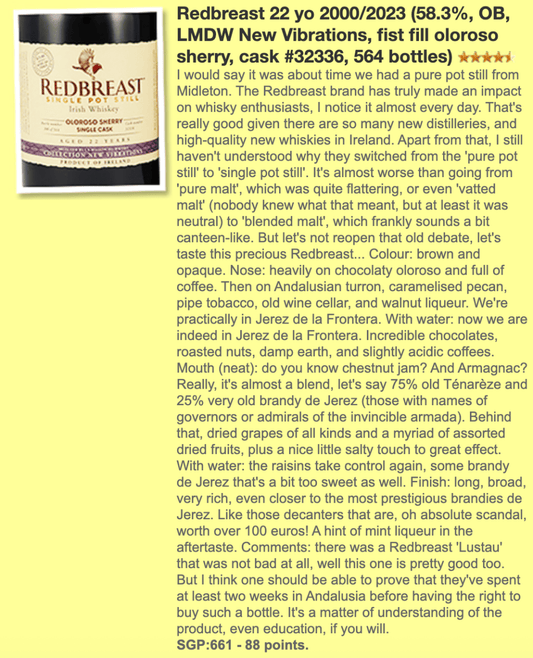
Redbreast 22YO, 2000/2023, #32336, Collection New Vibrations, 58.3% (WF88) (Cash/Credit Card Price)
Regular price HK$4,330Regular price -
The Nose Art Irish Single Malt 2001/2018, #3673, 50.7%
Regular price HK$1,380Regular price -
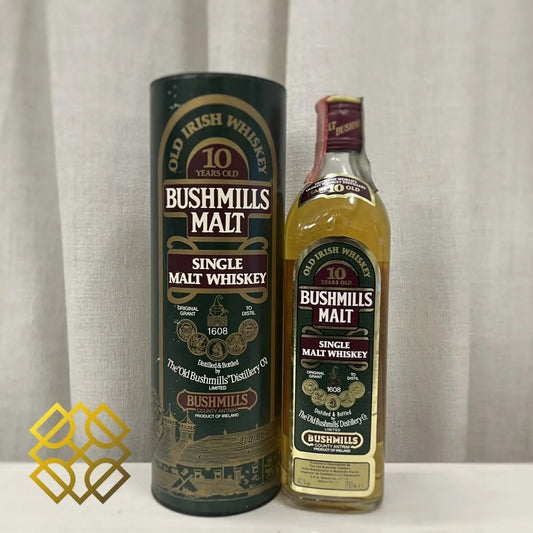
Old Bushmills - 10YO, Old Bottlings, 40%
Regular price HK$880Regular price -
The Nectar of The Daily Drams Irish - 8YO, 2017/2025, Vierge Marie, 53.1% (WB87.53)
Regular price HK$680Regular price -
Teeling 16YO, 2022, #16579, for Shinanoya, 58% (Cash/Credit Card Price)
Regular price HK$1,600Regular price -
Casky - Irish Whiskey 32YO, 1991/2024, #845, Finest Selection, 50.1%
Regular price HK$5,500Regular price -
Lichtburg #9 - 21YO, 2001/2023, #39735, 53.5% (WB88.64)
Regular price HK$1,360Regular price -
Waterford - Sheestown 1.2, 4YO, 2016/2020, 50% (WF87)
Regular price HK$480Regular price -
Waterford - Ballymorgan 1.2, 4YO, 2016/2020, 50% (WF87)
Regular price HK$480Regular price -
The Nectar of the Daily Drams Irish - 23YO, 2001/2024, 53.9%
Regular price HK$1,480Regular price -
The Nectar of the Daily Drams Irish - 22YO, 2002/2024, 54.6%
Regular price HK$1,480Regular price -
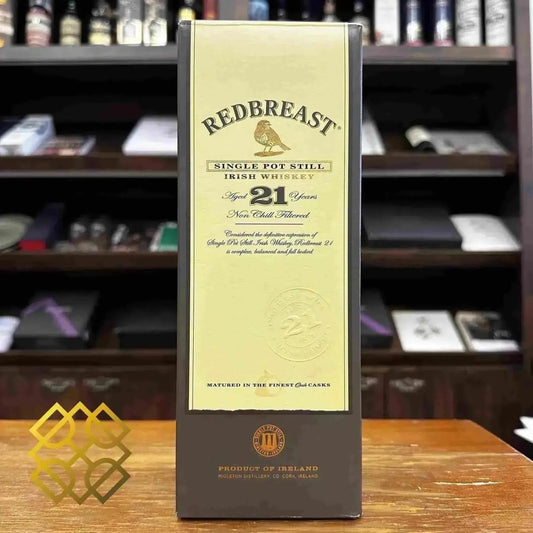
Redbreast - 21YO, Old Design Box, 46%
Regular price HK$2,050Regular price -
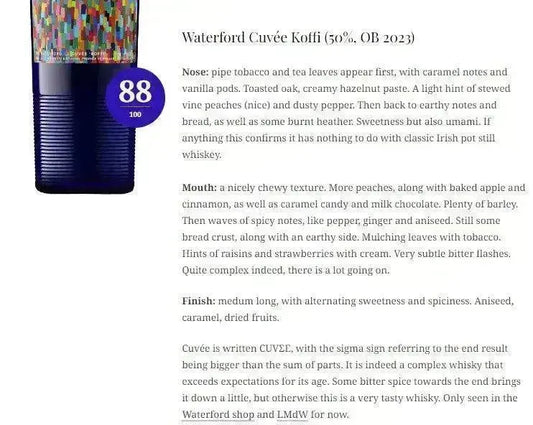
Waterford - 6YO, 2023, Cuvée Koffi, 50% (WN88)
Regular price HK$760Regular price -
Alambic Classique Irish Diamonds - 21YO, 2002/2023, #23081, 56.4%
Regular price HK$1,450Regular price -
 Sold out
Whic Irish Single Malt, 54.2%
Regular price HK$1,130Regular price -
The Nectar of the Daily Drams Ireland - 22YO, 2001/2023, 53.4%
Regular price HK$1,370Regular price -
The Nectar of the Daily Drams Ireland - 22YO, 2001/2023, 53.0%
Regular price HK$1,370Regular price -
Teeling - 21YO, 2022, Rising Reserve No. 1, 46%
Regular price HK$1,660Regular price -
 Sold out
Redbreast 12 Years Old, 2022, 40%
Regular price HK$450Regular price -
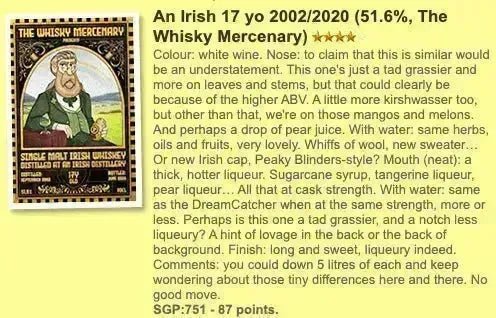
TWM Irish Single Malt - 17YO, 2002/2020, 51.6% (WF87)
Regular price HK$1,480Regular price -
Irish Whisky Advent Calendar - Drinks by the dram 12 days 2022 (12x30ml)
Regular price HK$700Regular price -
Lichtburg #6 - 21 Years Old, Irish #22, Peated, 53.4%
Regular price HK$1,380Regular price -
Lichtburg #5 - 21YO, Irish #19, Peated, 53.1%
Regular price HK$1,380Regular price -
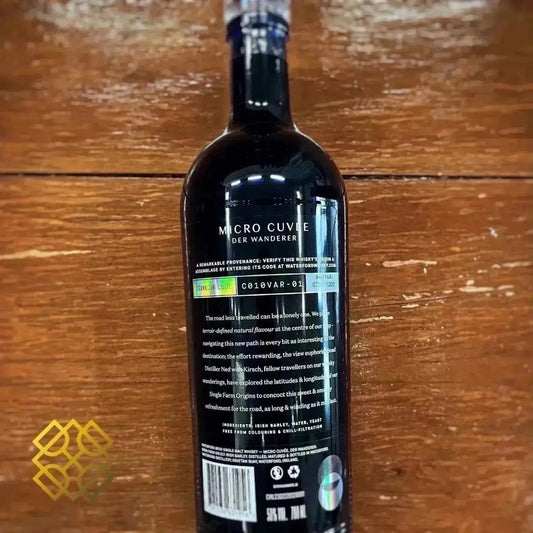
Waterford - Der Wanderer, Micro-cuvée, 2022, 50% (WF90)
Regular price HK$510Regular price -
 Sold out
Waterford - Cuvée Argot, 2023, 47%
Regular price HK$690Regular price -
 Sold out
Blue Spot - 7 Years Old, 2022, 58.9%
Regular price HK$1,250Regular price -
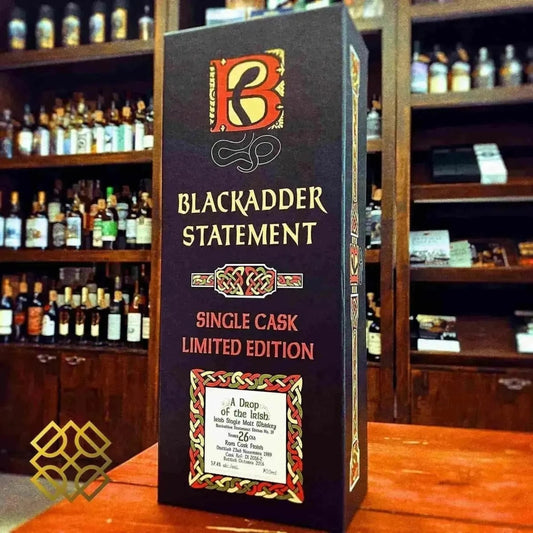
Blackadder A Drop of the Irish - 26YO, 1989/2016, 57.4%
Regular price HK$3,900Regular price -
Gold Spot - 9YO, 135th Anniversary, 2022, 51.4%
Regular price HK$1,550Regular price -
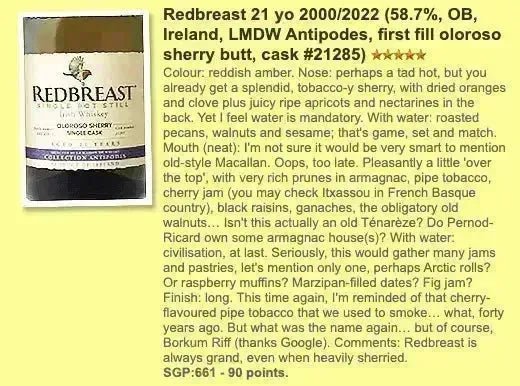
Redbreast - 21YO, 2000/2022, #21285 by LMDW, 58.7% (WF90)
Regular price HK$3,880Regular price